Visual Exploration:
The following video clips feature very
different perspectives, each valuable in its own insights. The Human Footprint is a
reality documentary exploring the Human Ecological Footprint throughout the
lifespan of a person. Princess Mononoke is a an artistic rendering of a fantastical
allegory of the conflict between humans and nature; with nature taking on the characteristics of gods and monsters creating the impression that the natural environment is mysterious and greater than the understanding
of humankind and deserving of reverence. Last is a video clip of another real
issue we are currently experiencing as a global community. We know what life is like as humans in quarantine.
While people are bunkering down during the pandemic, the environment is healing
and recuperating in much of the same way that nature heals when humans are
displaced at the end of Princess Mononoke. The question is will we see our
mission through to be better caretakers like the humans at the end of the film?
Human Footprint (2008) National Geographic: https://www.youtube.com/watch?v=UnH8p7udD8E
Tracking the lifetime consumption of a family, this segment features the amount of fruits consumed. As well as discussing the process they go through to be preserved for storage then shipped. Also discussed is the amount of trash, specifically aluminum cans consumed in a person’s lifetime.
Princess Mononoke (1997) Hayao
Miyazaki-Japanese Anime Fantasy
The main theme of the movie is the
environment. Specifically the struggle between the forest gods and humans that
mine and strip the natural world of resources. The main character Ashitaka goes
on an adventure to find a cure for his cursed arm and finds himself in a place
called Irontown. Irontown was built by a business woman named Eboshi, by clearing
the forest to mine the nearby mountain for iron. Evil comes from the mountain
and the iron that comes from it is cursed poisoned with hate. The symbol for
nature, the nightwalker, was hunted and decapitated. The forest begins to die
and Irontown is evacuated and destroyed. Once the head is reunited with the
forest spirit, the spirit dies and washes over the land regrowing and healing it. Eboshi then promises to
rebuild Irontown into a better place.
This clip is video review of the film by AO Scott from the New York Times. In his review, AO Scott describes the unique artistry Hayao Myazaki used to create a story about the conflict between man and the natural world. The transcript of the clip is available in the link. Transcript of Video Review
Average grade level readability is measured at about an 11th grade reading level. Specific vocabulary would need to be defined and discussed before hand using vocabulary card task where the word is broken into its parts adn each part defined, related words listed, and a quick draw illustrating meaning Chunk reading would be a good tool to engage each section then summarize in our own words. Most important focus would be on the last section where description of the conflict is explained because this ties in with the Pandemic video. Using both sources through discussion could help build into an assignment to extend and predict what our future could look like. We'd then brainstorm ideas and efforts necessary to achieve an outcome with humanity and nature in balance.
Pandemic Newsclip:
Before and after photos show a dramatic decline in air pollution around the world during coronavirus –https://www.cbsnews.com/news/coronavirus-photos-decline-air-pollution-lockdown/
Text Readings:
The readings center around the perspectives of indigenous connection to the natural world and efforts to merge those values with westernized conservation efforts. A book of poetry about the incredible diverse natural world we are stewards of is also featured to help nurture a deeper creative connection through visualization.

Dussault, J. (2018) Conservationists look to world's indigenous peoples for direction. Newsela
Conservationists compare and contrast
the relationship Indigenous peoples across the globe has with nature versus the
relationship western culture has with nature. Reading level can be differentiated through NEWSELA accommodating students at all levels. Additional supports include a short writing activity for students to identify the central idea and use supporting facts from the article. A quiz feature include multiple choice questions designed to strengthen comprehension skills. Students can take the quiz as many times needed to get 3 or 4 correct answers. The quiz questions shuffle or renew each time to avoid memorization. This article could be teacher led Close Reading or if reading at individual reading levels practicing close reading in small group gaining information collected into a short summary or journal entry including at least two quotes and two questions inquiring for more information based on the article. Questions may center around data collection (optional).
Bradley, O. (2018) Cultural Survival:
The Menominee Nation Takes on the Back Forty Mine Project. Website: Cultural Survival: The Menominee Nation Takes on the Back Forty Mine Project
The Menominee Nation is leading opposition to an open pit mine being developed on the banks of the Menominee River. The mine would extract metallic sulfide risking contamination of sulfuric acid which is dangerous by product of processing the mineral. In 2016 the development company Aquila Resources Inc was able to secure 3 of the 4 required permits to begin the mining project.
Using information gathered from the previous NewsELA article and 1 more outside choice source, students will choose one of three tasks below.
1. Students will write a letter to
their congress person discussing their concerns as a private citizen
2. Create 10 questions for a debate
between concerning groups and Aquila Resources
3. Create banners or signs for or
against the development and write 2-3 paragraphs discussing their reasons why.
Mahfouz, S. (2019) Poems from and
Green and Blue Planet. Hachett Children's Group. United Kingdom.

A collection of poems celebrating the beauty and diversity of Earth’s natural environment. Students will pick two poems and write a reflection about how the poem about the feelings the poem insprires or students create a visual interpretation (digital, multimedia, musical, drawing) of one chosen poem. Write 1-2 paragraphs describing why they chose the medium the chose and their interpretation.
Culturally relevant:
I looked at it from the perspective of our
local communities; exploring policies, events, environmental issues that
directly affect our living spaces in Chicago, Milwaukee, and Racine. There are
some big issues and amazing people and organizations leading the charge for awareness
and betterment of our shared natural resources. These three articles would work toward a final assignment discussing local efforts to reduce negative human impact on the local environment and dispel misconceptions. Students would practice skills such as annotation, close reading, diagram interpretation. I would like students to create 2-3 additional interview questions and prepare a news report to be shared in a simulated TV News airing.

Lyderson, K. (2019) Milwaukee Magazine: Here’s what’s being done about the raw sewage being released into our rivers during heavy rainfall. Website:
Here's what's being done about raw sewage being released into our rivers during heavy rainfall
The Milwaukee Metropolitan Sewerage District (MMSD) continues to face challenges after the construction of the Deep Tunnel. Since completion in 1993, Deep Tunnel holds excess sewage and rainwater runoff to decrease the amount of combined sewer overflows (CSOs) that take place. With the increase of rainfall due to climate changes, MMSD, expects greater challenges releasing CSOs into the waterways leading to Lake Michigan. The article looks into some of these challenges and efforts to increae green infrastructure in new development throughout Milwaukee.

Briscoe, T. (2019) The Chicago Tribune: 22 Million pounds of plastic enter the Great Lakes each year. Most of the pollution pours into Lake Michigan. Website: https://www.chicagotribune.com/news/environment/ct-met-lake-michigan-plastic-pollution-20190904-2xf3qogqv5bpfco2plndapak2q-story.html
When we think of microplastic pollution we think to our planet's oceans. However, concern is growing over the amount of plastics polluting our Great Lake Michigan. Governor J.B. Prtizker signed into bill directing the state Environmental agency to look into the impact of microplastics in our drinking waterways well as the local environment. Measures to decrease the amount of pollution is further discussed.
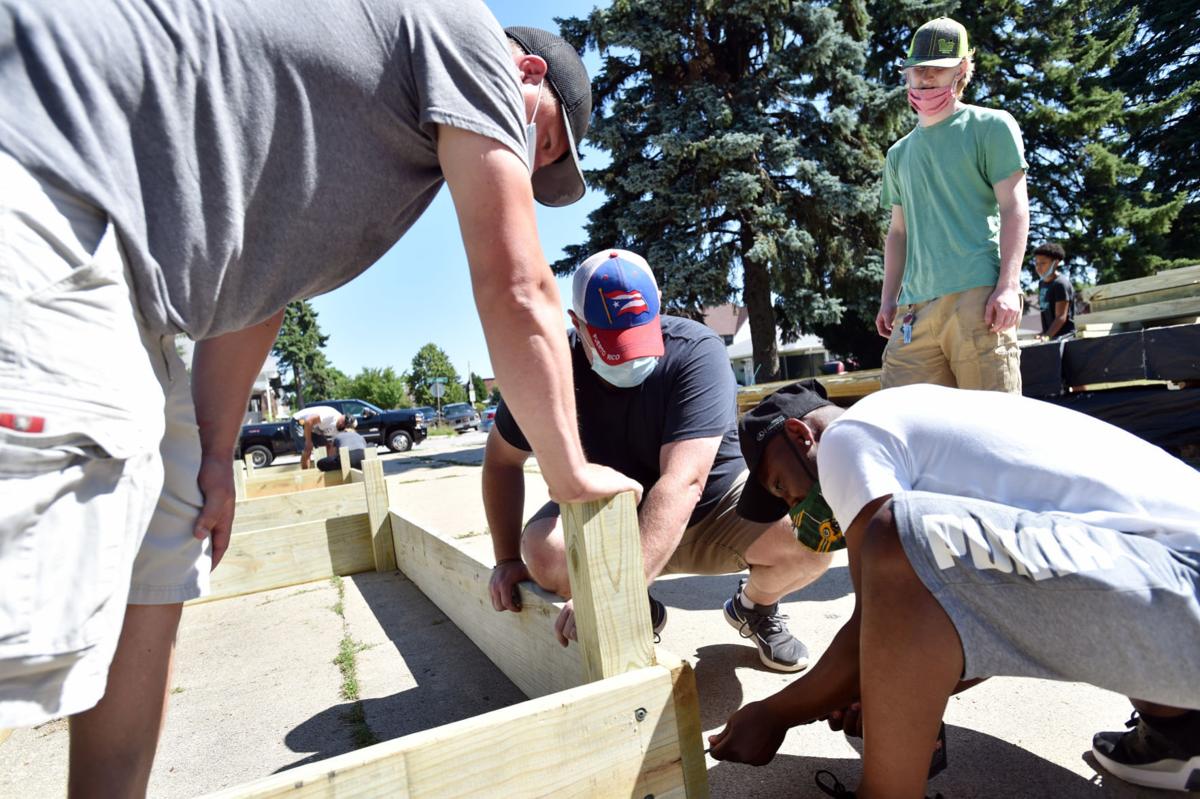
Rogon, A. (2020) The Journal Times: Caron Butler inspires dozens to come out and build community garden at Racine church. Website: https://journaltimes.com/news/local/caron-butler-inspires-dozens-to-come-out-and-build-community-garden-at-racine-church/article_e4ea512d-0a7d-5732-8da1-8b72d866faec.html
Racine Urban Garden Network mission is to educate and engage members of the community to utilize empty space into community gardens. Along with people growing their own food the community garden acts as the glue to bring people from diverging backgrounds together in effort to build stronger community bonds. including this newly constructed garden, there are nine other community garden sites throughout Racine


